• Blog Posts
  • Film Photography
  • About
  • Contact

The Art of Leaving

  • Beyond the Sea


    By

    Tarek Wolfhadi

    October 23rd, 2025

    My family had, and still has, a long and complicated history with the sea. We lived in a coastal town where the horizon was never far, where salt clung to the laundry and lived in the air. Ten minutes by car, fifteen by foot, the water waited at the edge of everything we did. An hour farther down the coast was the place we called ours—the camp, our sea.

    The men in my family belonged to it. My father and brother spent their days diving, spearfishing, vanishing into the blue. They spoke of the sea as if it were an old friend. The women were different. My mother and sister would jump into any body of water they found—lake, creek, even a puddle after rain. They trusted water; they understood it.

    I was neither like them nor unlike them. I loved the sea from a distance, but I did not know how to respect it. I watched. I memorized its colors. I never went beyond my knees. I told myself I didn’t need to.

    But I always looked.
    I never averted my gaze.

    Everyone said the same thing: the sea is treacherous. I believed them. The sea demands proof.

    I wanted to earn my place.


    One day, I gave in. It wasn’t bravery—it was curiosity. My father and brother had asked too many times, and I was tired of hearing my own excuses. They promised safety. They promised to watch me. They said the sea respects courage.

    The morning was bright. The water looked harmless, almost fragile. I put on the mask and snorkel. The rubber pressed against my face, sealing me away from air. Without my lenses, everything blurred—the line between sky and sea vanished, and the world became one long pulse of blue.

    We walked out until the rocks disappeared beneath our feet. I hesitated at the drop—the edge where color deepens and gravity changes. My father nodded once. I jumped.

    Majestic.
    Infinite.
    Blue.

    It was not the blue of postcards or shallow beaches. It was endless, heavy. I could not see the bottom, or the end, or myself. Something spiritual took hold of me. I had never seen such vast emptiness. I floated in something older than time, and for a moment it felt alive. It spoke, though not in words:

    You are here for a reason, and I am here for a reason.

    I went a little farther, then came back.
    Then again.
    Each time, the fear loosened.

    By the time we drove home that evening, I understood the sea. We had an understanding.

    I had finally earned my place.


    Months later, we went back. The same spot. The same calm surface. It was only me and my father this time. We waded in together, the water cooler than before. He spoke about his younger days, about the beauty of the deep, about fear being a door you eventually have to open. I listened. He was a man of few words, and I cherished every single syllable.

    While we talked, the water began to rise.
    Slowly.
    Quietly.

    The kind of danger that gives no warning. By the time I noticed, it was at my neck. The shore had receded. The color of the water changed. The sand was gone. My father saw my face and understood. He swam toward me.

    Then the current took us both.

    Had I misunderstood it?
    Had I not earned the trust of this majestic creature?
    Had I dragged my father with me in quiet defiance?

    But the ocean did not have time for my questions.
    It did not rage.
    It simply decided.

    Within seconds we were far from land. The same blue that once felt divine became cruel.

    Uncaring.
    Treacherous.
    Suffocating.

    My father told me to float on my back, to breathe. I obeyed. He held on to me and swam, not knowing which way was land. I stared at the sky, white and indifferent.

    Time dissolved.

    We had lost hope. This was my ending. A punishment for defiance.
    For thinking I had earned something that was never given. For trying to understand.


    Then the sea made another decision. Out of the horizon, a small boat appeared—wooden, slow, ordinary.

    Fishermen.

    They saw something floating, moved closer, and threw down a rope. My father immediately pushed me toward it. The fishermen pulled me up.

    The moment I reached the boat, my father’s body went still. It was as if every muscle had waited for that cue—to stop. One of the men jumped in to pull him out.

    When we reached the shore, the sea was calm again. As if it hadn’t nearly claimed us both.

    Uncaring.
    Treacherous.
    Suffocating.


    I thought about that day for years. Fifteen now, maybe more.

    I thought about the fisherman—why he woke early, why he turned his boat, what invisible thread led him to us. I asked questions I couldn’t answer: Was it mercy, or coincidence, or something divine? Was I saved, or spared, or simply postponed? Did the sea want me to live—because it shouldn’t be easy to escape a cruel experiment?

    The feeling of suffocation never left. It lived somewhere inside me, quiet but patient. Sometimes I could feel it even when I was breathing fine. I went to the local pool, dove to the deepest end, stayed under until my lungs began to shake. I wanted to face it, to train for it, to make sure it never owned me again. I did not want to be afraid. I took a diving course. I learned pressure, depth, ascent. I thought knowledge could protect me.

    It didn’t.
    The sea had only changed its shape.


    As I grew older, I realized the threat was everywhere.
    The same suffocation.
    The same stillness.
    The same helplessness.

    It arrived in rooms, in crowds, in silence. It came while driving, while sitting still, while doing nothing at all.

    The sun that warms you also burns your skin.
    The air that sustains you suffocates your lungs.

    Everyone claims the sea can be treacherous,
    but no one warns you that air can drown you.

    One evening, it returned. I was driving home when my breath caught for no reason. The air was thick, hostile. I parked at home, climbed to the rooftop, and looked for space—sky, wind, anything. I looked at the stars, waiting for them to whisper to me. I wanted to believe the open air would let me understand. That it would provide the reprieve I had so longed for.

    It didn’t.

    I lit a cigarette to measure my breathing. Halfway through, the air was angered by my defiance. My head fell forward. I could no longer lift it up. I curled on the floor, cheek pressed to the dust.

    No waves.
    No currents.
    No water.
    The same suffocation.

    I stayed there until the night changed color. When I finally stood, I saw the imprint of my body left on the concrete— the shape of arms, knees, face.

    A ghost made of dust.

    Tomorrow, the wind would erase it.


    Sometimes, I wonder if that was the lesson the sea was trying to teach me all along. That the first drowning was not an accident, but a rehearsal. A preparation for all the others that would come later— the invisible ones,
    the quiet ones, the ones that leave no evidence.

    The sea saved me once, but maybe only to show me what waited beyond it:
    the kind of drowning that has no surface,
    no fisherman,
    no rope,
    no rescue.

    The kind that happens in plain sight, in open air, with eyes open.
    The kind that does not pull you under, but keeps you still—
    breathing,
    watching,
    slowly disappearing.

  • When Morning Comes


    By

    Tarek Wolfhadi

    September 29th, 2025

    When morning comes,
    the nightmares will crawl back
    into the crevices of the walls.
    Every wicked creature gnawing at your skin
    will scatter where the light
    does not dare look.

    When morning comes,
    your body will feel whole again.
    The void in the chambers of your heart,
    will be filled with glorious light.
    The air, once suffocating,
    will lift you up
    fill your lungs with ease.
    Grace
    will steady your breath.

    When morning comes,
    the people will gather.
    Once lost, now they surround you
    with love and kindness.
    The emptiness beside you will fill again.
    Hands will reach,
    voices will soften,
    and loss will learn to keep its distance.

    When morning comes,
    the trees will be ripe with harvest.
    Toil, suffering, tears and sweat,
    turn into grain and gold.
    Seeds planted,
    flowers bloom.
    The cracked palms, the weary shoulders,
    will finally taste their reward—
    bread warm, water sweet,
    a moment free of burden.

    When morning comes,
    it spills light on silence,
    the stillness bends beneath the light.
    The sun warms a shape that no longer stirs.
    Its touch arrives softly, almost tender,
    on skin already turning back into earth.

    When morning comes,
    I will already be elsewhere,
    beyond its reach.

  • Little Blue Books


    By

    Hisham Alboug

    September 16th, 2025

    When I was a child my parents bought me all kinds of books. I had a phase where I was reading short stories where the heroes were animals. Kalilah wa Dimnah, Aesop’s fables, among others, were the cornerstone of my humble library. I fell in love with the idea of creating stories from the ether, so naturally I began weaving my own small tales of heroism, adventure, and courage.

    I cherished telling stories, made up on the spot, to my siblings and cousins. I would use every medium I had access to at that age — photographs, figurines, even shadow puppets just before bedtime.

    When I started the first grade, things progressed. I was not satisfied with the narrow limits of creativity offered to us, and I was easily bored. I would pay attention just long enough to grasp the core of what was taught, then drift into my infinite universe — conjuring scenarios far beyond the four walls that surrounded me. I invented heroes and villains out of the faces around me. I daydreamed about the limitless possibilities of what my tender mind could create.

    In the second grade, we traveled to Medina to visit relatives. My mother returned one morning with a pencil, a sharpener, and a small blue notebook. She suggested I start writing the stories in an attempt to capture the universes I kept conjuring in my head. That afternoon I sat on my bed and feverishly wrote story after story. Chickens and foxes, wizards and knights ran amok on the pages of the little blue book.

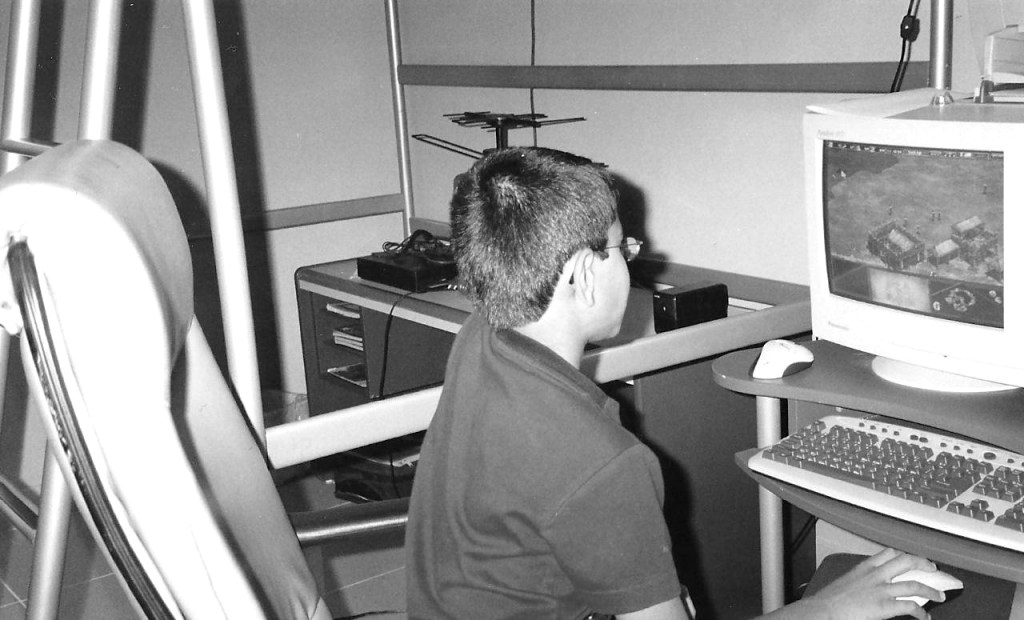
    By the third grade, a new revolution began. My father brought home a PC. Instead of teaching me how to use it, he left me to my own curiosity, to discover what every click and every icon meant. Soon enough, I was typing my stories on the computer. I only used two fingers, but engaged every neuron in my mind. To feel a sense of accomplishment, I typed them in size 24 font to make as many pages as possible, then spent hours playing with colors and titles until they pleased me. The cover page remained light blue — a tribute to my first notebook.

    Eager to showcase my creations, I brought some of the printed stories to school. As I read to the other students, or let them read themselves, they delighted in seeing characters fashioned after them. I learned then that the people who surrounded me often became the foundation of my worlds, a core for my imaginary creations.

    Though my school years were mostly traumatic, a few gestures of kindness still shine through the haze. One of my third-grade teachers noticed one of the neatly stapled blue books. He approached me and asked for a copy; I was ecstatic. The next day he returned and said he had gone to the printers, had copies made, and that they had sold. Out of his own wallet, he handed me a fresh fifty-Riyal bill. That day I discovered that I could do something I loved and be rewarded for it. I carried home both pride and the first money I ever felt I had earned.

    Another teacher, also named Khalid, had a different approach. He bought me a set of Parker pens. In the third grade, an ink pen was a mark of honor; only fourth graders and above could use them. He also wrote me a full-page letter, expressing his exhilaration at what I had accomplished so far, and his belief in the beautiful things I could still create as I honed this gift. I still look back at that letter from time to time.

    By the fourth grade, it was time to grow up. Expectations from parents, society, and myself began to weigh heavily. The daydreams still came, but the writing had stopped. A shift had occurred not just in my imaginary worlds, but in the tangible one. I poured my heart into schoolwork, into a future I had not chosen, but that seemed already laid out for me.

    By secondary school, the plans had solidified. I competed on the national level in various subjects, I was enrolled in the gifted students program. Yet everything was focused on what was considered “prestigious” at the time. In our quiet, polluted little town on the coast, where constant sunshine and humidity were occasionally broken by acid rain, it was decided that I would go into engineering. The little blue books were buried beneath chemistry and physics books.

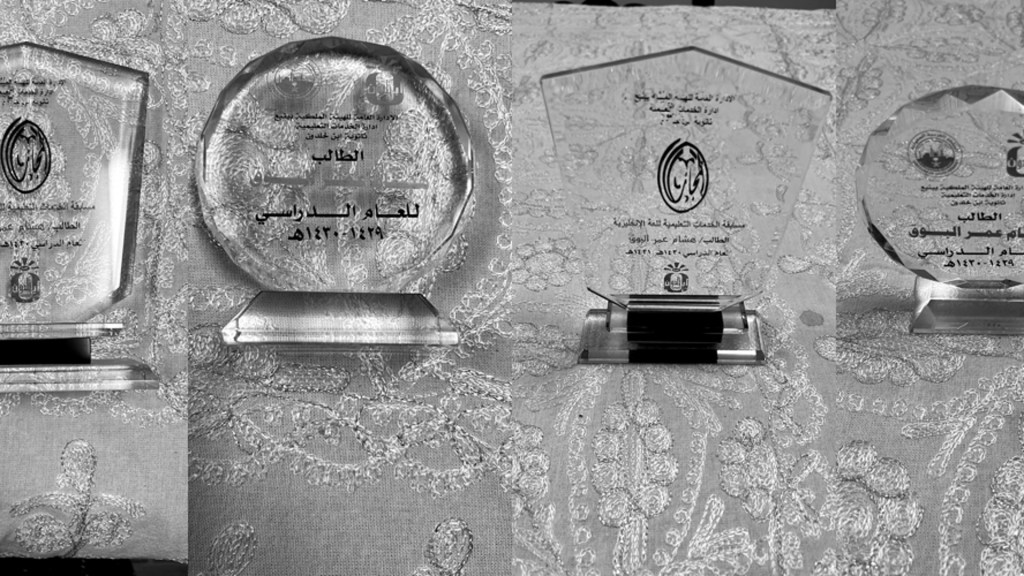
    There were two things that compounded the loss of my creative outlet. The first was the heavy shadow of reality. I needed to secure a future, a steady income, a way to make my parents proud. Certificates to hang on a wall. Trophies to shine on a mantle. I thought engineering was the surest path to earn those accolades; after all, I was genuinely capable of handling the natural sciences.

    The second, an extension of the first, was the harshness of puberty and early adulthood. This was especially exasperated by the undiagnosed mental health struggles I carried. I was always slightly different, slightly out of place. I made the unconscious decision to suppress these differences and conform to the rules that surrounded me. I was in constant conflict — trying to be myself, and trying to fit in. It led to a loss of identity; I became a stranger in my own home.

    I had, without knowing, buried my dreams with my own hands in the jasmine gardens of our backyard, replacing them with what I thought was the “correct” thing to do. For over a decade, I followed the path I was pressured into, but also carved for myself, because I did not have the courage to disrupt what I believed were the natural laws of the universe.

    Around 2011, I began journaling — a practice encouraged by my therapist. It felt natural. In 2016, I began writing fragments and paragraphs here and there. By 2021 I started sharing them with friends and colleagues. The flame was kindling again. While the worlds did not return easily after being buried so long, I absorbed from the real world and transfigured it into words. This time the journal was on my phone and laptop, which, by coincidence, wore a bright blue cover.

    Since then I have struggled to accept myself as a writer. How could I be? I could never tell if what I wrote was any good, no matter the feedback. This was no longer about animals and children’s bedtime stories. How could I possibly compete, especially after being away for so long? It felt like attempting to walk on a different planet.

    In 2023 I began to embrace my past and work diligently to recapture it. I started a blog. I wrote letters. Some were sent, others lived on my hard drive. Yet I never dared call myself a writer or a photographer. I would say I take photos, or I write occasionally, but never take a step beyond that.

    Then in 2024 I met a gentle soul. He shared his life with me, reflecting so many of my own struggles. He began pulling me out of my comfort zone and into creative gatherings. At one event, after shaking hands with attendees, he introduced me as a writer, and a photographer. Something shifted in my soul. In addition, during this trip, I met a group of passionate individuals, that encouraged me. Each exquisite individual, in their own way, brought another piece of firewood that further ignited my passion.

    What prompted this long, semi-biographical piece was a Nepalese hotel employee in Tokyo. I had met him yesterday in the lounge and we exchanged a few words. Today, as I entered with my laptop to write one of the twelve letters I promised, he asked if I was here for work. What I answered surprised me; not just because of the content of the answer, but how naturally it came.

    “I’m on vacation, but I decided to do a little work.”

    “What do you do?”

    “I’m a writer.”

  • In Nomine Nihil


    By

    Elias Khoury

    September 2nd, 2025

    Gods of Green watch over me,
    Let me breathe, but never free.
    Gods of Earth conceal my past,
    A mercy built to never last.

    Gods of Blue drown me at sea,
    Currents drag what’s left of me.
    Gods of Fire burn my name,
    Ashes to ashes, all the same.

    Gods of Wind scatter my bones,
    Lost beneath forgotten songs.
    Gods of skin deny my face,
    A stranger in my rightful place.

    Gods of stone refuse my plea,
    Silent walls surrounding me.
    Gods of Night erase my breath,
    Wrap me in the cloth of death.

    And when no Gods left to call,
    I kneel before the void of i all.
    Neither Sky nor Earth my home,
    Forever bound, yet forced to roam.

  • The Man of Many Faces


    By

    Layal Almulla

    August 2nd, 2025

    It was my first time wandering this strange city alone. It was both welcoming and repulsive. It extended an invitation I gladly accepted, fully knowing it was a trap.

    The creatures on the sidewalks—some slouched, some floating an inch above the ground—didn’t acknowledge me. I wasn’t important enough to be perceived, not relevant enough to be feared. My presence was merely tolerated.

    I kept walking until my feet began to ache. A bench appeared like a mirage, lit by a single flickering streetlight. I approached without hesitation. I sat.

    That’s when I noticed him.

    The Man of Many Faces.

    He was already there, legs crossed, eyes closed, dressed like a distant dream. His face changed slowly, like clay softening in warm water. With every blink, a new man emerged—an old friend, a childhood enemy, a stranger from another lifetime.

    I was curious. “Who are you?” I asked.

    “I am simply a vessel. A container of borrowed voices. I hold what is poured into me, and nothing more.”

    His voice was familiar and foreign, layered in accents that didn’t belong to this city—or any other.

    I watched as his face shifted—delicate transformations that made me feel like I was staring at every person I’ve ever loved or lost.

    “Which of these is your true face?”

    “The one that appeals to you the most.”

    “What if I cease to exist?”

    He opened his eyes. They were my eyes.
    He smiled. It was my smile.

    “Then I become you.”

    I looked down at my hands and counted my fingers. I whispered my name, again and again. But it still sounded like a lie.

    I don’t remember standing up. I don’t remember walking home. I just remember the bench being empty.

    I haven’t seen him since. But I see traces.

    In mirrors.
    In photographs I don’t remember taking.
    In moments when I wonder which version of me I will be today.

    And sometimes, late at night, I feel my own face shifting—ever so slightly—in the dark.

  • We Who No Longer Dream


    By

    Elias Khoury

    July 15th, 2025

    I wish I could dream.
    But I do not dream anymore.

    I would dream of buying photo albums,
    filling them with things that happened, and things that never will.
    Pictures of people I’ve lost,
    and images of those I never met —
    faces I invented just to feel less alone.

    I would dream of getting a new canvas.
    Not to draw something beautiful.
    Just to splatter paint without consequence,
    without guilt,
    without shame.
    To make a mess and still be loved after.

    I would dream of learning Russian
    just to read Dostoevsky the way he was meant to be read.
    To sit with his despair in its native tongue.
    To understand what greater men have written
    about anguish, madness, and grace.

    I would dream of piano lessons
    to play her favorite songs.
    Hoping she’d hear past the notes,
    past the noise,
    into the hollowed chambers of my heart.

    I would dream of crossing things off an ever-growing bucket list.
    Skydiving,
    getting my pilot’s license,
    scuba diving through wreckage,
    running a marathon on borrowed knees.

    I would dream of waking up without bargaining with the day.
    Of mornings that didn’t begin with negotiation —
    where the weight of survival wasn’t the first thing I put on.
    Of brushing my teeth without rehearsing apologies.
    Of crossing a room without remembering who used to stand in it.

    I would dream of quiet that didn’t feel like failure.
    Of silence that wasn’t punishment.
    Of rest that actually restored something
    instead of sharpening the ache.

    I would dream of being whole.

    I wish I could dream.
    But I do not dream anymore.

  • Brown Paper Bags


    By

    Tarek Wolfhadi

    June 14th, 2025

    The memory is hazy, a lingering fog surrounds it, but portions are much sharper. The frst thing that was devoured by the fog was the sound of your laugh. I loved making you laugh—it would feed into my empty vessel, and recharge my famished soul—the way the streetlights drink the moths. As long as your laugh still echoed, I was alive.

    Were we in the Village or Chelsea? It doesn’t really matter.

    We spent the day pacing the river. I liked to meticulously plan our route, but you kept making detours; this would usually make me anxious, but I had you in my arms—a sedative. Every time I called you an idiot you laughed and threw your head on my chest—I could do nothing but embrace you and absorb whatever life I could.

    East River, or the Hudson?

    You took care of me when I was sick, you made sure I was always hydrated, you avoided downhill roads because you knew I had a bad knee. Even when we were watching that horrible play, I could see you from the edge of my eyes glancing to make sure I was enjoying my time. You made promises. A lot of them. You laced every one of them with the words Always and Forever. I believed you, clung to every promise like a lifeline.

    You rose up from the table before I did. Did the breakup scar you too, or was it easy to simply get up and keep walking. I still had to walk you home, carrying around my shattered heart in a greasy brown takeaway bag with the leftover noodles.

    Or was it a rice bowl? The fog thickens.

    Your apartment was only a few blocks over, yet felt like the last mile in a marathon. I knew it was the last time we would walk together, the soles of our feet shattered after thousands of miles. Your laugh never surfaced once; life was seeping out of me. My soul once a vibrant pond, an ecosystem sustained by your laugh, now drained and barren. My brain spasmed in my skull—there had to be a spell, a collection of syllables, a set of letters strung together, that could make you change your mind, or at least laugh one last time.

    Sixteenth Street, or were we drifting north on Ninth Avenue?

    You were drunk, again. the pocket flask filled with vodka lay closer to your heart than I have ever managed. You once confessed to me that you were worried I’d find you unlovable sober, that the raw version of you was “too much.” I resent you for not giving me the chance to prove you wrong.

    Were your fingers still threaded through mine, or was I already gripping air?

    I guided you slowly through intersections and pedestrians, my hands lightly moving you around with precision.
    I wanted to call you an idiot.
    I wanted you to fall to my chest.
    I wanted to embrace you.
    I wanted to remind you of the promises you made.

    Was the intersection finally clear, or did time itself stall so we could cross?

    But our fates were sealed long ago, because you would never let the chance of something beautiful get in the way of your stubbornness. You held such grand resentment for yourself. And happiness was merely something that was lost in the fog a long time ago.

    Was the clock blinking 2:13 a.m. or 4:05? Either way, the night was already spent.

    I opened up the door to your tiny apartment, the bed touching three of the four walls, your craving for loneliness touching the fourth. You fell asleep as soon as your head hit the pillow. I knew had to leave, nothing connected us anymore. A stranger standing next to you as you dream. But I was frozen, you might have cut every tether, but I still couldn’t lift my anchors.

    Two flights up, or three? The stairs keep slipping away.

    When I finally left the apartment, my feet could no longer carry me, I sat on the stairwell, frozen in time, wondering how this came to be. There were no signs, no explanations, only a dead end. I took the subway back home, looking at all the faces, wondering what they carried in their little brown bags. Chinese takeout? Or broken souls? I found your flask in my coat pocket; perhaps I stole it while undressing you. Now I cradle it near my own heart, praying it offers the same fraudulent armor it once gave you.

  • inventory


    By

    Elias Khoury

    June 14th, 2025

    If I open the freezer, what are the chances I’ll find ice cream? Or will I just find the Man in the Yellow Suit again? Last time we spoke, he couldn’t understand a goddamn word I was saying. Every sentence I threw out was either misheard, reinterpreted, or ignored. Our faces were having their own parallel conversation—mine pleading, his squinting. Every time my lips sang, his brows growled.

    I open the freezer. No ice cream. Of course not. But there he is, standing there like he pays rent. Triumphant. Like he knew I’d come crawling back. He taps on a pack of frozen hotdogs with the kind of smug rhythm that makes you want to start throwing things. He waits. He knows I can’t shut the fuck up.

    I go for the obvious: “Why are you in my freezer?”

    He doesn’t even blink. “Understanding is a form of violence. Curiosity is motive. You invited me.” He talks in long, airless sentences, like a deflating tire leaking prophecy. Then he steps out, knocking over broccoli without apology. I don’t stop him.

    “Did you see any ice cream?” I ask, casually, stupidly.

    “There’s only guilt in there.
    And shame.
    And a lasagna from 2019.
    You should clean more often.
    You really let yourself go too.”

    I try to say something, anything—but the words don’t come. Just that familiar knot in my throat. Globus sensation, the old bastard. Loyal as ever.

    He opens the fridge this time, rummages like he owns the place, finds a jar of pickles. Opens it. They scream. He goes and sits on the frozen peas. They weep.

    “I just wanted to know if there’s ice cream,” I mumble sheepishly. He eats the screaming pickles, one by one, like he’s doing me a favor. I fucking hate pickles.

    I start rummaging through the freezer. First with purpose. Then with panic. Maybe he’s right. Most of this shit is expired. Frostbitten boxes of half-eaten hope. Regret in tupperware. Grief in aluminum foil.

    “Do you really think ice cream will fix this?”
    “Why is a man your age still looking for comfort?”
    “Shouldn’t you be doing grown-up things by now?”

    The voices stack. They all sound like him. He doesn’t need to speak.

    My heart spikes. I try to scream. Nothing. My throat’ is locked. He smirks, the little fucker. He’s enjoying this.

    And then—I hear it. The front door. Opens. Closes. Sharp. Deliberate. I look at the clock. Past midnight.

    Of course. She’s here.

    The Woman in the Little Black Dress.

    I just wanted some ice cream. Instead I get a fucking intervention.

  • A Glow Meant for Others


    By

    Layal Almulla

    June 8th, 2025

    What kind of world have we built—
    one where we long for sunlight in the depths of night,
    and chase after the moon beneath the afternoon sky?

    The sun no longer sets; it retreats.
    Shamed by towers, hidden behind glass and steel.
    Maybe that’s why he looked elsewhere.

    He was always drawn to the moon.
    A devotion I never shared, never questioned.
    I assumed it was harmless.
    Most obsessions begin that way.

    We’d sit at the restaurant on the corner,
    and he’d insist we stay outside, even in unbearable heat.
    He’d glance up between sentences—
    again and again.

    When we took our old bikes out,
    he once stopped in the middle of the road,
    got off without a word,
    and looked up.

    “Full moon tonight,” he said,
    not to me.
    Not to anyone.

    Some nights I’d find him on the rooftop.
    Smoke curling toward the stars.
    Eyes fixed on something I could never become.
    The way he used to look at me.

    I knew, long before he did,
    that one day he would leave me for his true love.

    And he did.
    Not suddenly. Not violently.
    But in increments.
    Gaze by gaze. Silence by silence.
    The kind of departure you don’t notice
    until you reach for someone
    and find nothing.

    I grew to resent the moon—
    her calm, her arrogance,
    her smug glow.
    She never spoke.
    She never had to.

    She offered him nothing but reflection,
    and still, he chose her.

    Perhaps he was right to.
    She never interrupted.
    She never asked for more.
    She simply was.

    But I—
    I asked for things.
    Answers. Warmth. Presence.
    A little patience.
    A little honesty.

    I tried, once, to follow his gaze.
    To understand what it meant to love something that would never look back.

    I looked too long.
    He moved on.
    I stayed behind.
    The moon forgot my name.

    I don’t look up anymore.

  • Salt and Silence


    By

    Layal Almulla

    June 1st, 2025

    I leaned in close and told him I was drowning.
    Not metaphorically. Not romantically. Not symbolically.
    I was sinking. And I begged him to save me,
    because I didn’t know how much longer I could hold my breath.

    He looked at me—unbothered.
    Placed a hand on my shoulder, like it meant something.
    Then said, “Suffering is a blessing. Wear it proudly.
    It builds character in those born without any.”

    He quoted philosophers. Prophets. Saints.
    Their words floated above us like oil on water.
    But my ears had already surrendered to the crashing tide.
    I heard nothing but waves.

    “What is it you want me to do?” I asked, my voice trembling.

    “Embrace it,” he said, without pause.
    “Lower your head. Let the water pass through you.
    “Do as I command, and you’ll be free of the weight.”

    My legs were numb from the cold.
    The water had crept past my waist, then my chest.
    I had no option but to oblige.
    There was no land behind me, no future ahead.

    The surface met my mouth. My nostrils.
    My body tried to resist, flailing against itself.
    But my soul had already gone somewhere quieter.

    Still, I opened my eyes one final time.
    But he had been long gone.
    My savior. My witness. My executioner.

    No hand reached for me. No voice called my name.
    Only the water remained—silent, all-knowing.

    A soul adrift in salt and silence,
    forgotten even by the sea that swallowed me.

1 2 3 … 6
Next Page→

Blog at WordPress.com.


Loading Comments...
 

    • Subscribe Subscribed
      • The Art of Leaving
      • Already have a WordPress.com account? Log in now.
      • The Art of Leaving
      • Subscribe Subscribed
      • Sign up
      • Log in
      • Report this content
      • View site in Reader
      • Manage subscriptions
      • Collapse this bar