INCIDENT REPORT
Classification: Confidential
Case: 26-017
Subject: SP-0211
Attending Agent: HCY-01 “HALCYON”
Operation: NOLI SPECTARE
Status: Active
RECOVERY NOTE
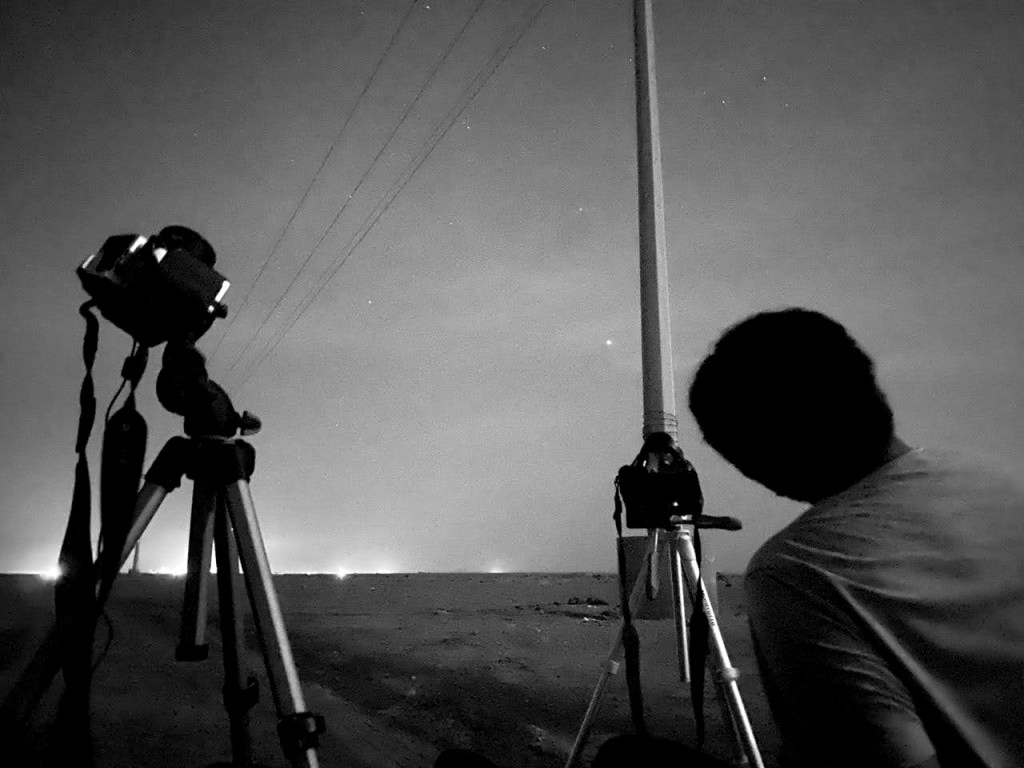
Record enters mid-stream; start conditions unavailable. Capture ends abruptly. Subject was recovered after termination in a seated position, visually tracking beyond direct focal range. Source attribution is absent from this copy. Detected nonverbal events are retained in-line.
DIRECTIVE
Do not interpret. Do not reassure. Do not escalate. Retain the capture in its current form unless directed otherwise by [REDACTED]. If retention is not possible, dispose without review and log disposal as routine.
TRANSCRIPT
[AUDIO: STATIC / LOW-BAND HISS]
[READOUT: FIELD 0.03 | ATTENTION 0.00]
SP-0211: So, you think you’re so clever.
But I can tell.
I can see what you’re doing.
SP-0211: Staying in the edges, slightly out of my eyesight.
SP-0211: Not anywhere I would look directly. In hidden corners of a room that people often ignore. You overlay yourself on things that have been there forever. Why should anyone give you another glance? You are an integral part of this building, of this room, of that hallway.
[AUDIO: PAUSE]
SP-0211: That’s how you present yourself, isn’t it?
SP-0211: When I’m walking about—in my room, in my office, in my hotel—
SP-0211: We don’t really
see you.
Hovering quietly. Innocently.
But always
patiently.
[AUDIO: QUICK SWALLOW]
SP-0211: That’s when I catch a glimpse—something at the edge of my eyesight—and I look quickly. I swear I saw something move.
SP-0211: And then it’s just that vase, you know? In the same exact corner it has been for the last two years. Or it’s just that motel art of a fishing boat you saw on the way in.
SP-0211: No—it’s just nothing. Don’t. Don’t overthink it. Maybe you’re just anxious today.
[READOUT: FIELD 0.28 | ATTENTION 0.17]
[AUDIO: STATIC—BRIEF SURGE]
SP-0211: But eventually, I caught on.
SP-0211: I figured out what all of you have been doing while we were all just going about.
SP-0211: Now, I look closely.
At that old library.
The bookcase.
The bathroom sink.
At the record player gathering dust.
SP-0211: There is something just slightly out of line and it’s not really there for function. It does have a screw or some kind of nail?
What is it? What is it exactly?
SP-0211: And as soon as I start to recognize your misshapen,
out-of-place bodies,
you start to react.
You move ever so slightly.
[READOUT: FIELD 0.41 | ATTENTION 0.29]
[AUDIO: SNIFFLING]
SP-0211: I don’t know if you have faces, or eyes, but I can feel your stare.
SP-0211: Did you wonder? Just as I do.
How did we end up in this predicament?
SP-0211: But it seems to me that it was an option for you.
You knew what you were doing. It was all by design. While I was clueless.
SP-0211: We were all just meandering, walking through our days thinking about right and wrong.
About interest rates.
Halloween costumes.
Performance reviews.
SP-0211: We were running quickly from middle school to middle age.
SP-0211: Never had a chance to— [AUDIO: CLEARS THROAT] —to stop in that hallway where you felt a strange gaze following you.
SP-0211: You thought to yourself, what if I just take a quick look, just to make sure nothing is there. While others just told you to stop being insane.
SP-0211: There is no way this entire world was built with these intricate little things that no one can identify.
SP-0211: So now I sit here and I don’t know what I do with this knowledge that I have.
SP-0211: I cannot pretend I do not know.
I cannot communicate with you.
SP-0211: I do not know your intentions, except that you are everywhere and you seem to be as one entity and you’re watching us as a species. That you somehow have the capability to [REDACTED].
[READOUT: FIELD 0.64 | ATTENTION 0.71]
[AUDIO: TAPE WARBLE]
SP-0211: But other than that, I really don’t know where you’re going with this. Except that I know you’re here. Every time I walk— [AUDIO: UNINTELLIGIBLE / IMPACT SOUND—KNOCK OR FOOTSTEP] —and then it’s one of you.
SP-0211: You look back.
We simply go on about our day.
SP-0211: Yet I keep having this tingling sensation that there’s more to this.
There’s some kind of observer effect that is going on.
SP-0211: As soon as I figured out that we are being observed, even though I have not shared this information with anyone, I wondered if this might ruin the scale of the experiment?
SP-0211: Because your gaze has changed towards me. Your interactions have been ever so slightly more…
[AUDIO: VOICE STRAINS ON THE WORD]
SP-0211: Vengeful.
SP-0211: When I walk past the plants, they no longer welcome me. The birds, they sing something different that is foreign to me. Not the words that I could understand.
SP-0211: I turn at the corner of the street and I notice a streetlight.
And I swear I can see you laughing menacingly.
[READOUT: FIELD 0.79 | ATTENTION 0.93]
[AUDIO: LONG PAUSE]
SP-0211: So I go home.
SP-0211: I try to just simply be.
SP-0211: I understand— [AUDIO: VOICE BREAKS] —that this hostile world exists.
Slowly turning against me,
drowning me with every breath.
SP-0211: As I sit here,
I notice more things gathering just at the edge of my eyesight.
Yet I fear moving my eyes.
SP-0211: They gather slowly around. Some to mourn, some to celebrate.
SP-0211: Others simply to bear witness to the man who was there.
[AUDIO: MULTIPLE VOICES OVERLAP / INCOHERENT]
SP-0211: I,
am no longer
part
of this world
because they
have asked me to leave.
[READOUT: FIELD 1.00 | ATTENTION 1.00]
[AUDIO: END / LOW STATIC CONTINUES—NO VOICE]



 The Art of Leaving